

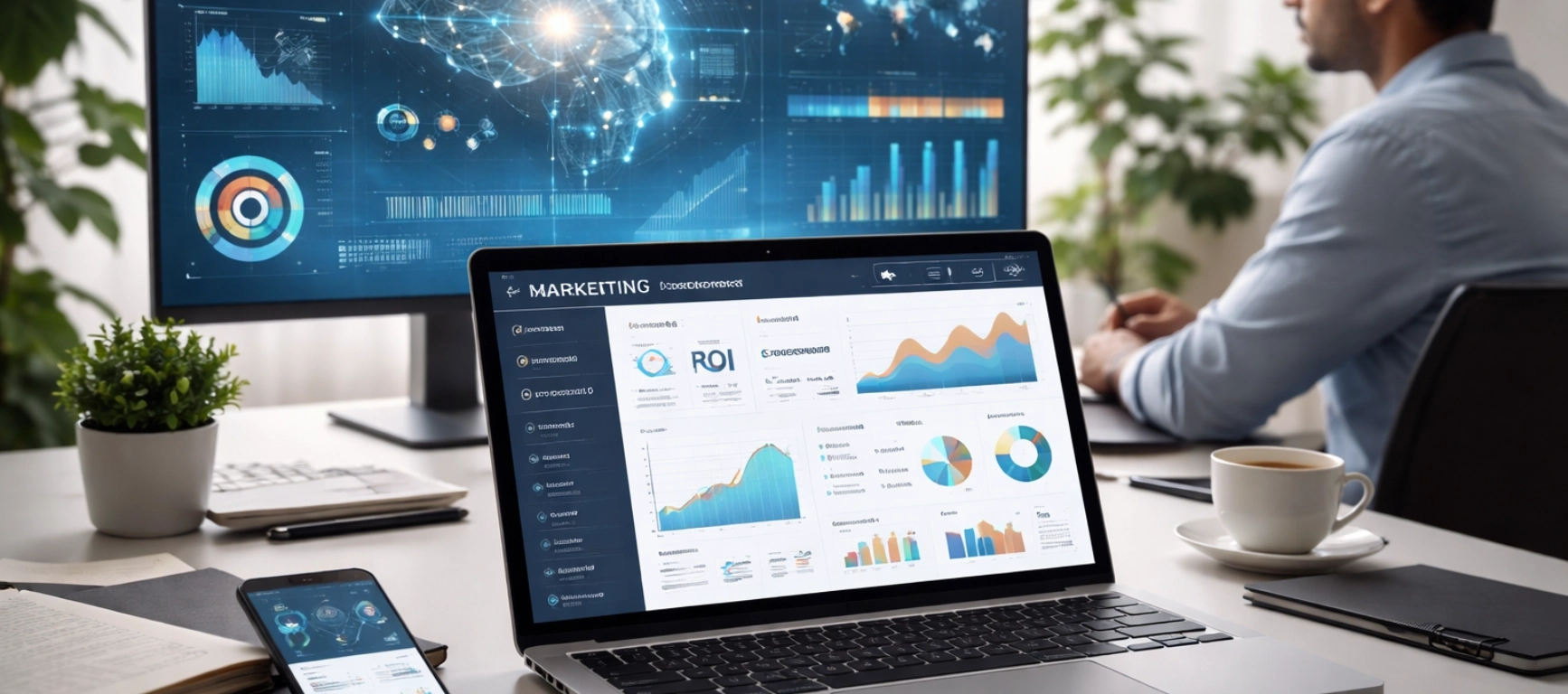
Digital Marketing Trends in 2026: How AI Is Redefining Strategy & ROI
Digital marketing in 2026 has moved beyond experimentation with artificial intelligence—AI is now the backbone of modern marketing strategies. Businesses that leverage AI effectively are seeing faster decision-making, deeper customer insights, and significantly higher ROI. From predictive analytics and content automation to personalised customer journeys, AI is redefining how brands attract, engage, and retain customers.
This blog explores the most impactful digital marketing trends of 2026, focusing on how AI-powered marketing strategies are transforming performance and profitability.
AI as the Core of Digital Marketing Strategy
In 2026, AI is embedded across every stage of digital marketing. Marketers no longer rely solely on historical data or gut instinct. Instead, AI analyses large datasets in real time to identify patterns, forecast outcomes, and automate actions.
AI in digital marketing is now used for:
- Customer behaviour prediction
- Automated ad bidding and targeting
- Personalised content delivery
- Performance forecasting and optimisation
These capabilities allow businesses to remain agile in competitive digital environments.
AI-Powered Customer Insights & Predictive Analytics
Predictive analytics is one of the strongest AI-driven trends in digital marketing. AI algorithms analyse user behaviour, purchase history, engagement signals, and intent data to anticipate customer actions.
Benefits include:
- Accurate demand forecasting
- Smarter lead scoring
- Personalised customer journeys
- Reduced customer churn
By adopting predictive analytics, businesses can proactively respond to customer needs instead of reacting after opportunities are lost.
Marketing Automation at Scale
Marketing automation in 2026 is far more advanced than traditional email workflows. AI-powered marketing automation platforms manage entire campaigns across channels, optimising delivery timing, messaging, and audience segmentation.
Examples include:
- Automated email and SMS journeys
- AI-optimised ad campaigns
- Smart retargeting strategies
- Behaviour-triggered content delivery
This level of automation reduces manual workload while increasing consistency and efficiency.
AI-Driven Personalisation & Customer Experience
Personalisation is no longer optional—it is expected. AI-driven personalisation allows brands to tailor content, offers, and experiences in real time.
AI enables:
- Dynamic website content
- Real-time product recommendations
- Personalised ad creatives
- Adaptive landing pages
Customers now expect relevant experiences, and brands that fail to deliver risk losing trust and conversions.
Content Creation & Optimisation with AI
AI-powered tools now support content marketing by:
- Generating content drafts
- Optimising headlines and copy
- Predicting content performance
- Identifying keyword opportunities
While human creativity remains essential, AI accelerates production and ensures content aligns with SEO and user intent.
Measuring Marketing ROI with AI
AI-driven attribution models provide accurate ROI insights by analysing multi-touch customer journeys. Marketers can now:
- Identify high-performing channels
- Reduce wasted ad spend
- Optimise campaigns in real time
This data-driven approach allows brands to justify marketing budgets and focus on strategies that deliver measurable growth.
Challenges & Ethical Considerations
Despite its advantages, AI in digital marketing presents challenges:
- Data privacy concerns
- Algorithm bias
- Over-automation risks
Marketers must adopt AI responsibly, ensuring transparency, compliance, and ethical data use.
Conclusion
Digital marketing trends in 2026 are driven by AI-powered innovation. Businesses that integrate AI into their marketing strategies gain deeper insights, stronger personalisation, and higher ROI. The future belongs to brands that combine human creativity with intelligent automation.